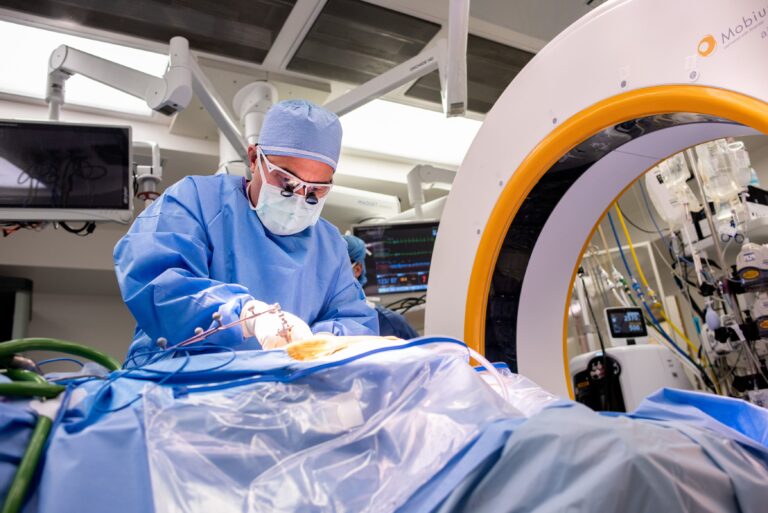
Traditionally, spine surgery has been performed under general anesthesia, requiring patients to be completely asleep with a breathing tube. Today, advances in minimally invasive surgical techniques and regional anesthesia allow certain spine procedures to be performed while patients remain awake using spinal anesthesia and light sedation—eliminating the need for general anesthesia in carefully selected individuals.
Awake spine surgery combines minimally invasive surgical techniques with spinal anesthesia to provide a less invasive experience from both a surgical and anesthetic perspective. Patients remain comfortable throughout the procedure while avoiding intubation and many of the side effects associated with general anesthesia, such as postoperative nausea, grogginess, and temporary cognitive changes. Many patients are able to walk within hours of surgery and return home the same day.
Dr. Chan leads the high-volume awake spine surgery program at Och Spine Columbia/NewYork-Presbyterian, and is one of few spine surgeons in the region offering awake spine surgery for select lumbar procedures, including decompressions, discectomies, minimally invasive lumbar fusions, and sacroiliac joint fusion. Every patient undergoes a comprehensive evaluation to determine whether awake surgery is the safest and most effective option. While not appropriate for every procedure—such as large spinal deformity corrections—awake surgery can expand access to treatment for patients who may not tolerate general anesthesia because of advanced age or underlying medical conditions.
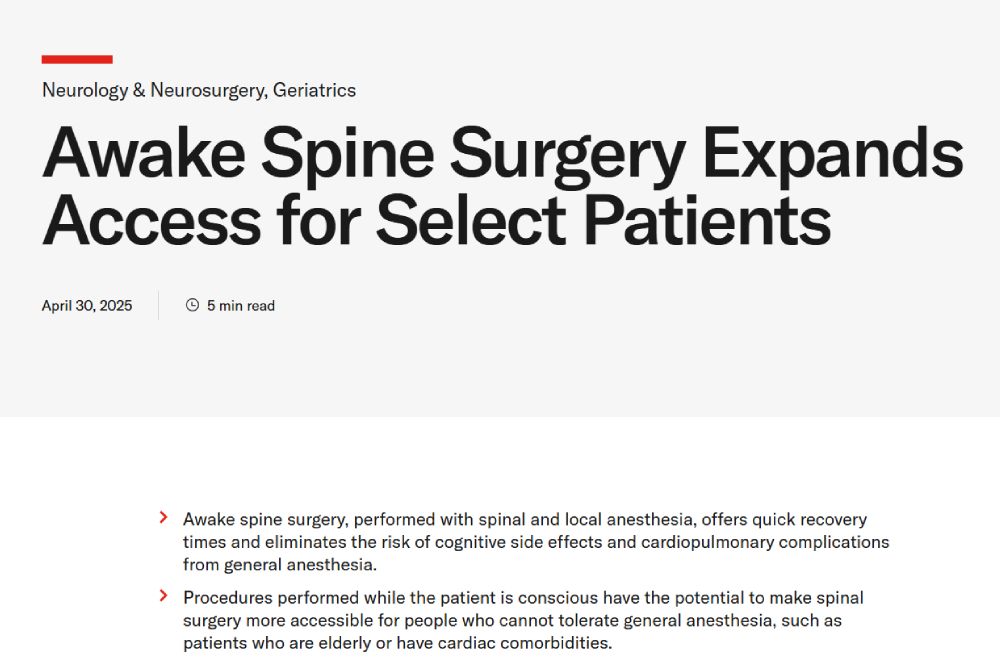
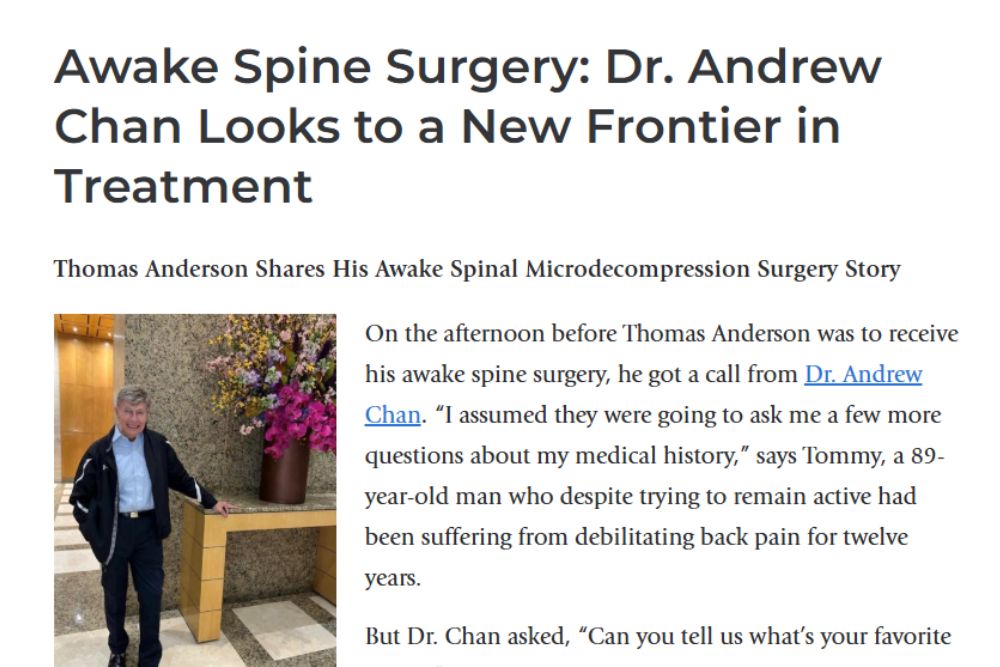
Successful awake spine surgery requires close collaboration between the spine surgeon and anesthesiology team. At Columbia/NewYork-Presbyterian, Dr. Chan works with experienced neuroanesthesiologists to develop an individualized anesthesia plan that prioritizes patient comfort, safety, and rapid recovery. This multidisciplinary approach allows many patients to undergo spine surgery with less physiologic stress while maintaining the same surgical goals and outcomes as traditional procedures.
As an early leader in awake spine surgery, Dr. Chan has helped introduce this technique at NewYork-Presbyterian and continues to advance its use for appropriately selected patients. His work has demonstrated how combining minimally invasive surgery with spinal anesthesia can safely expand treatment options for elderly patients and those with significant medical comorbidities who might otherwise be poor candidates for surgery under general anesthesia.
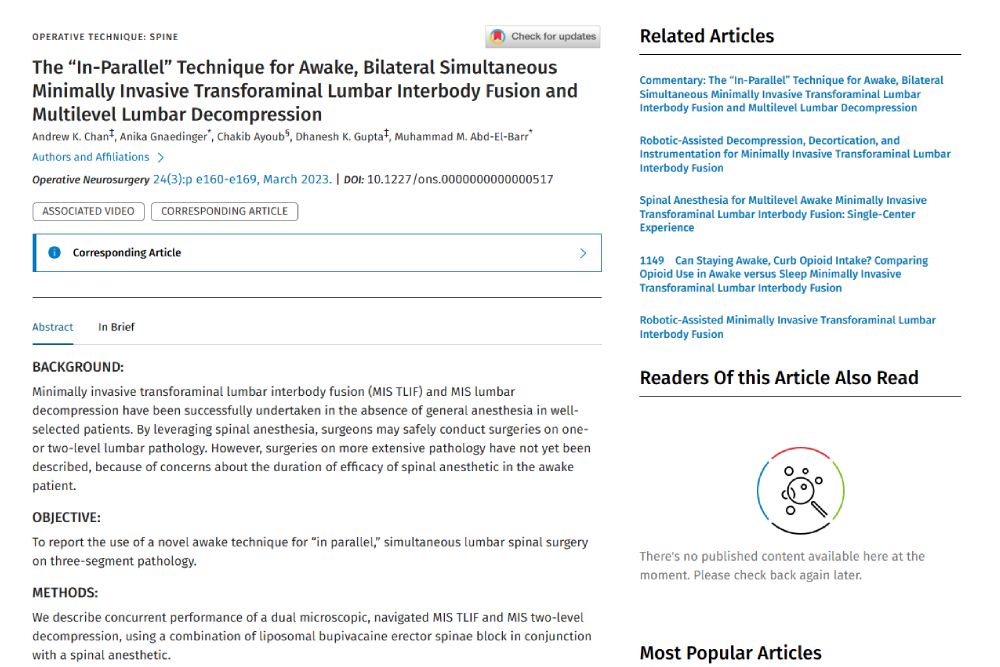
Read about Dr. Chan’s published technique in Operative Neurosurgery detailing how awake surgery permitted multilevel lumbar spine surgery in an 87-year-old patient.