Not every spinal condition requires a fusion. For many patients, the best operation is the one that relieves pressure on the nerves while preserving the natural motion of the spine. Endoscopic spine surgery is the least invasive form of spine surgery and can be an excellent option for carefully selected patients with herniated discs, spinal stenosis, or pinched nerves. Dr. Chan is happy to be the surgeon who brought endoscopic spine surgery to Columbia Neurosurgery.
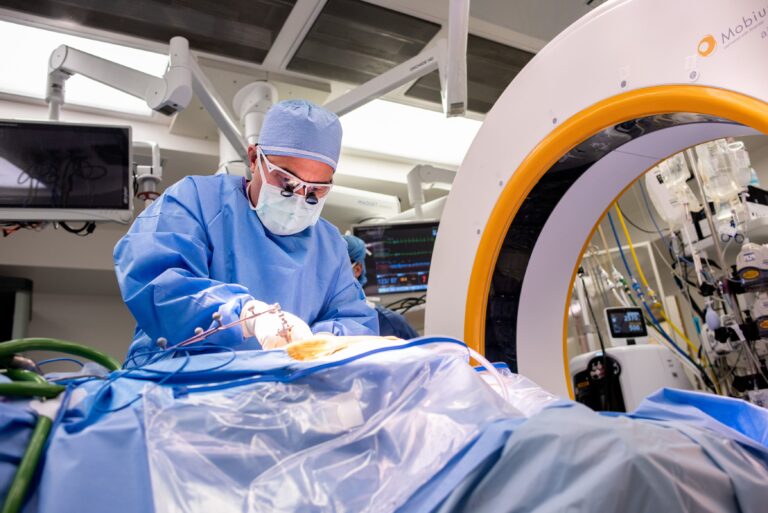
Using a high-definition surgical endoscope inserted through an incision often measuring less than one centimeter, Dr. Chan can perform precise decompressions and discectomies while minimizing disruption to the surrounding muscles and soft tissues. Compared with traditional surgery, endoscopic techniques may result in less postoperative pain, smaller incisions, faster recovery, and an earlier return to daily activities.
Dr. Chan believes that the best spine surgery is the least invasive operation that reliably achieves the patient’s goals. Whenever possible, he recommends motion-preserving procedures that avoid spinal fusion without compromising long-term outcomes. Every patient undergoes a comprehensive evaluation to determine whether endoscopic surgery, minimally invasive fusion, or another treatment offers the greatest chance of success.
As part of his commitment to advancing minimally invasive spine care, Dr. Chan uses endoscopic techniques while emphasizing careful patient selection and evidence-based decision-making.
Learn more: Listen to Dr. Chan discuss his minimally invasive surgical philosophy and how modern techniques are expanding treatment options for patients with spinal disorders.
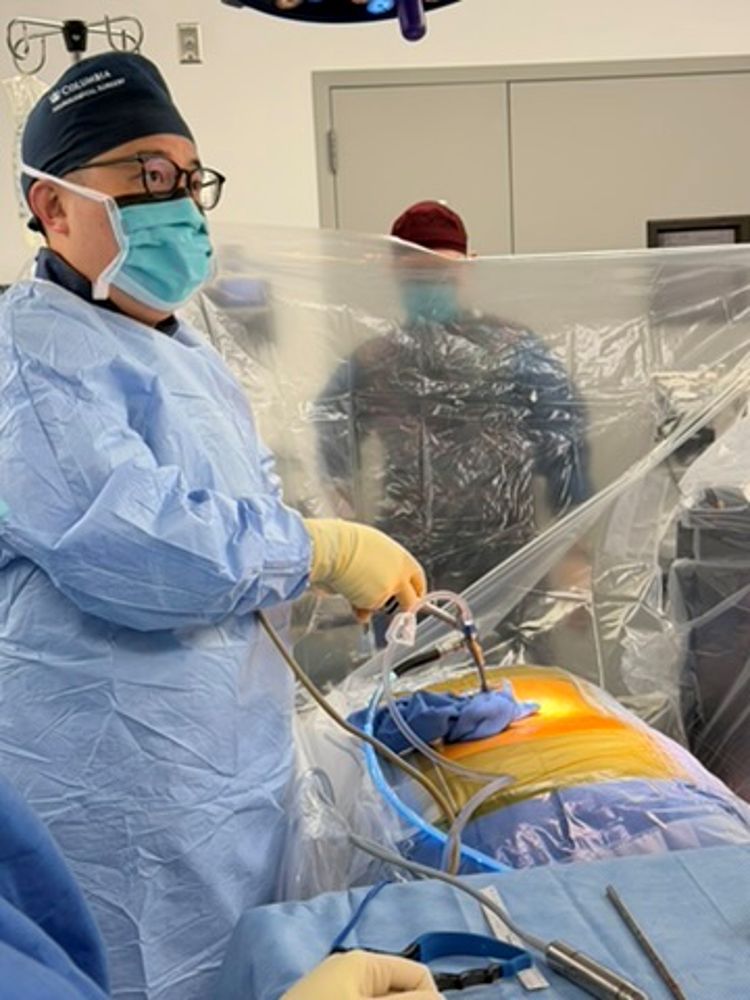
Dr. Chan performing endscopic spine surgery via an 8-mm incision. The incision is ultimately covered with a band aid.